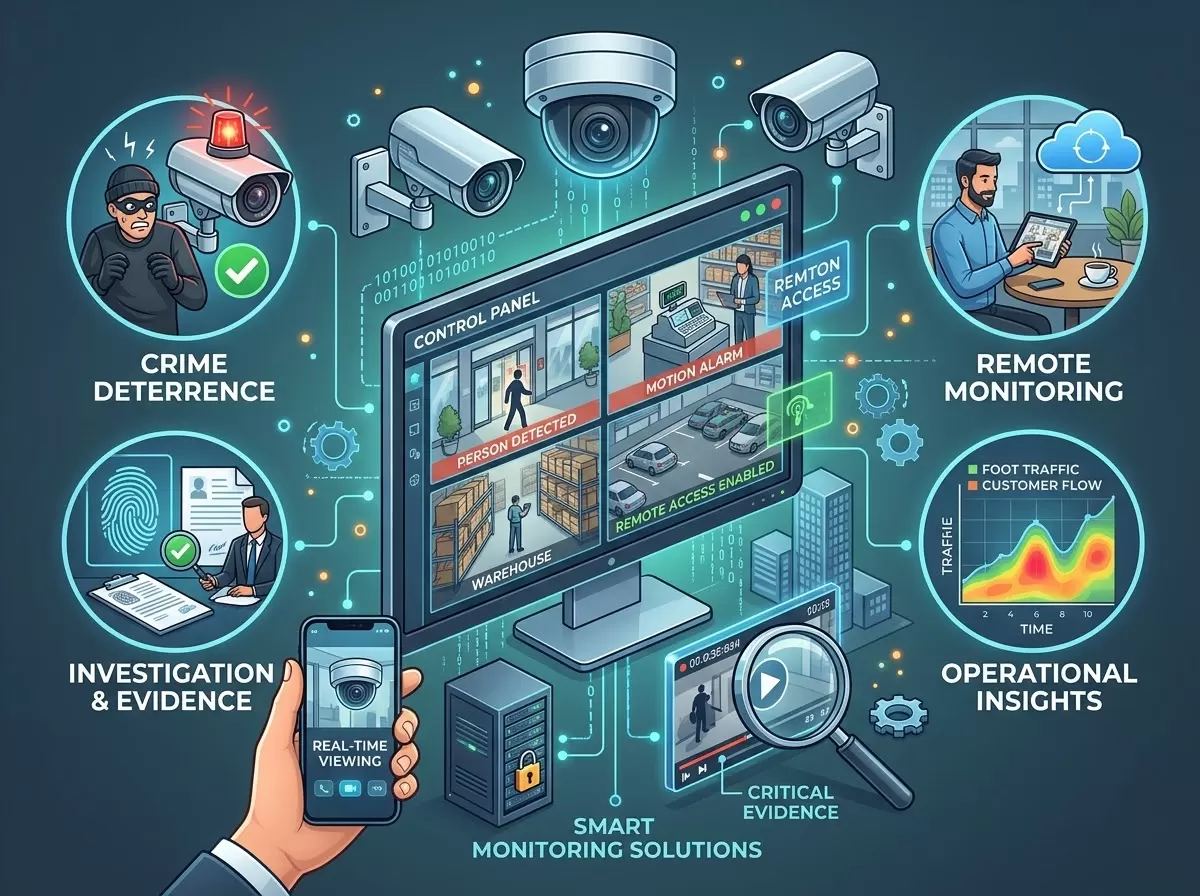
When businesses begin researching surveillance systems, they often encounter terms such as CCTV, analog cameras, HD cameras and IP cameras.
Understanding these technologies can make it easier to discuss requirements with a professional installer.
What Is Traditional CCTV?
Traditional CCTV systems generally transmit video from cameras to a dedicated recording device through physical connections.
Modern analog systems can provide significantly improved video quality compared with older generations of analog CCTV.
What Are IP Cameras?
IP cameras, or network cameras, transmit video over a network.
They can be connected through network infrastructure and may provide features such as remote access, high-resolution video and advanced analytics depending on the equipment.
Connectivity
Traditional CCTV commonly uses dedicated video cabling.
IP cameras use network connectivity.
The appropriate choice depends on the building, existing infrastructure and project requirements.
Image Quality
Both modern analog and IP systems can provide high-quality video.
Specific performance depends on the equipment selected.
Remote Monitoring
Both types of systems can potentially support remote viewing when configured with appropriate recording, networking and security equipment.
Installation Considerations
A professional installer should evaluate:
- Existing cabling
- Network infrastructure
- Power requirements
- Camera locations
- Recording requirements
- Storage
- Internet connectivity
- Security
Which Should You Choose?
There is no universal answer.
The appropriate technology depends on the property, budget, infrastructure and surveillance objectives.
Conclusion
Understanding the differences between surveillance technologies is the first step toward selecting a suitable CCTV solution.
Transase Technologies can assess your requirements and recommend an appropriate surveillance configuration.